
Your Cart
100% Secure Checkout!
No products in the cart.



Clergy and Congregational Initiatives are efforts designed to strengthen the relationship between religious leaders (clergy) and their communities (congregations). These initiatives often focus on fostering spiritual growth, improving communication, and addressing the needs of the congregation through outreach programs, educational opportunities, and social justice efforts. By supporting both the personal development of clergy and the collective well-being of the congregation, these initiatives aim to create vibrant, engaged, and compassionate faith communities that serve the broader society.
Innovation HUB The Samuel DeWitt Proctor Conference, Inc. (SDPC) has established the SDPC Innovation HUB to help congregations and communities effectively address economic, educational, political and social challenges, as well as individual and communal histories. These challenges can be variously related to justice and injustice, our individual and communal woundedness, generational concerns, sexual identity and spiritual alienation. To this end, the SDPC Innovation Hub (The HUB) guides congregations in the design, development and implementation of needed programs and initiatives to address current and emerging issues.
The Hub offers a series on grant making and how to design effective proposals to solicit investment and external support for the work of ministry. The Hub also offers a limited number of small grants for congregational leadership teams to refine a project concept, enhance project design, oversee its launch and evaluate its impact.
The Hub convenes living expos to share innovative models of ministry that demonstrate what can be achieved to address specific and pressing realities facing churches in general and the Black church in particular.
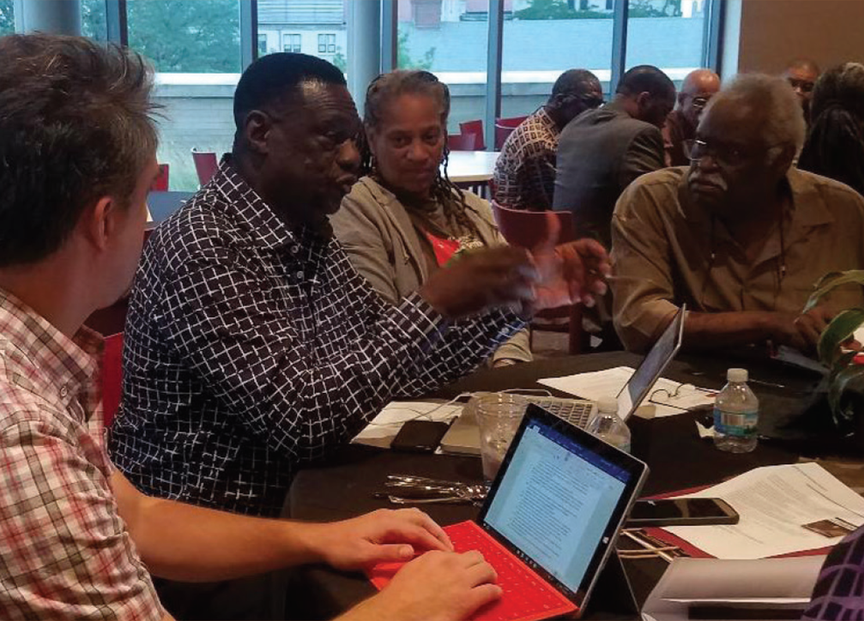
The Hub is a living resource sponsoring face-to-face forums, conversations and gatherings that can be accessed online. The Peer Learning Soul Circles & Table Talks are offered as Sacred and Holy Conversations where old ministries are expanded and deepened, while new ministries are envisioned and born.
The Hub hosts, produces and archives digital and written exchanges (papers, presentations, video conferencing, etc.) about factors which often affect the sustainability of churches and the diverse communities they serve.
Through our partnerships with seminaries and associations, The Hub offers continuing education units and certifications in areas of theology, pastoral ministry and congregational learning.
Educational programming includes ministry formation classes and advanced study as intensive courses. This continuing education program of The Hub is intended to help individuals and congregations acquire essential capacity-building knowledge and skills, which their churches and communities need for short-term and long-range sustainability.
The Hub offers congregations that want to grow and change, the opportunity to shadow, observe and participate in different or new congregational models and new methods of ministry.
Through a church mentorship model, participants explore the possibility of learning new ways for spiritual engagement and enlightenment, which may transform individuals, congregations and entire communities.